The story
A history in motion.
From Lille to the large workshops, eight chapters tracing a firm, its teams and its generations.
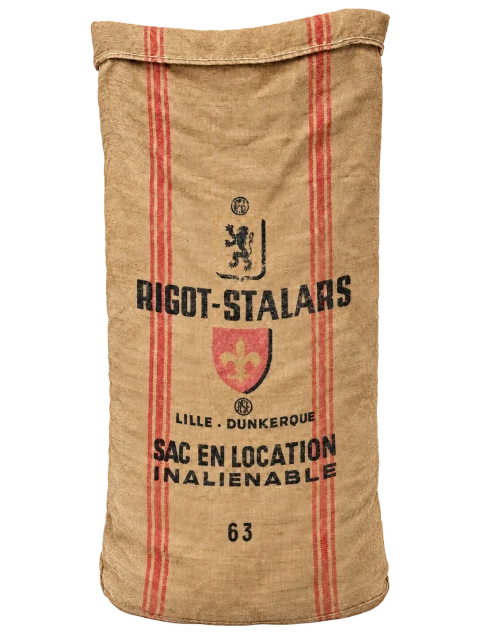
A firm does not span two centuries by standing still. Children take over their parents' work, brothers become partners, workshops are acquired and rebuilt. Chapter by chapter, discover how the original Lille trading business became an industrial and family story.
1826 · Origins
A firm is born in Lille
Two houses bought in 1826, followed by a business that changes hands. Prosper François's illness brings his sons into the firm sooner than expected.
Read chapter 119th century · Expansion
From one establishment to another
The three brothers become partners and choose Dunkerque to be close to goods arriving at the port. The family shares responsibilities between its establishments.
Read chapter 21914–1918 · The ordeal
Holding on through war
Sacks also become objects of war. The network grows through hardship, while Joseph's death changes one branch of the family forever.
Read chapter 31926 · The centenary
One hundred years: a firm reunited
After a fire and reconstruction, 8 December 1926 brings the generations together. The celebration also marks the beginning of a different organisation.
Read chapter 41927–1951 · Generations take turns
Rebuilding, then passing on
Marquette in 1928, Fives in 1933: the firm acquires the means to manufacture its own cloth. Deaths and war bring further changes in responsibility.
Read chapter 5Trades · Materials
The hands behind the firm
Follow a sack from its first use to its repair. Rediscover the skills, machines and teams that give meaning to industrial decisions.
Read chapter 61956–1974 · New materials
A new era for packaging
Soplaril, Bemis-Rigot, then Vandesmet: several paths lead to new forms of packaging. Partnerships transform both products and leadership.
Read chapter 71975 · A rupture
The turning point of 1975
The Agache-Willot takeover changes ownership of the group. Jean leaves his role as managing director in September, while the establishments follow different paths afterwards.
Read chapter 8